
Why the Everglades Is Known as the River of Grass
The Everglades is known as the River of Grass because it is, quite literally, a slow‑moving river of shallow freshwater flowing through vast prairies of sawgrass—an ecosystem shaped more by water movement than by dry land or deep channels. Marjory Stoneman Douglas popularized this name in her 1947 book The Everglades: River of Grass, helping the world understand that this landscape is not a useless swamp, but a living river system with global ecological importance.
From “Worthless Swamp” to River of Grass
For much of history, people dismissed the Everglades as a “worthless swamp” that should be drained and developed. Early settlers and developers saw standing water, marsh, and mosquitoes—not a functioning river system.
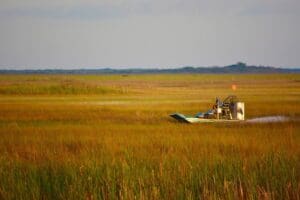
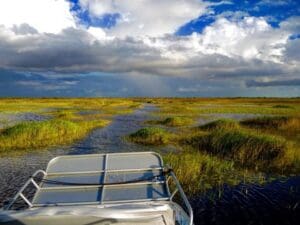
In The Everglades: River of Grass, Marjory described how water flows across South Florida from the Kissimmee River and Lake Okeechobee in a broad, shallow sheet, spreading through sawgrass marshes instead of carving one deep channel. Her phrase “River of Grass” captured both the motion of water and the dominant vegetation that you see on an airboat ride with Everglades River of Grass Adventures – endless sawgrass stretching to the horizon, rippling like a living river when the wind blows.
A Shallow, Slow‑Moving River
Unlike most rivers, the Everglades doesn’t look like a narrow band of water. Instead, it behaves as a sheetflow system: Water moves south from Lake Okeechobee in a wide front, sometimes tens of miles across.
Depths are usually measured in inches to a couple of feet, not in tens of feet like a typical river.
Flow rates are slow—on the order of hundreds of feet to about a mile per day when water is moving freely—yet that steady movement is enough to feed marshes, recharge wetlands, and sustain wildlife.
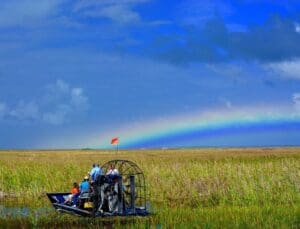
When you glide across the Everglades grasslands on an airboat, you are riding over this shallow river. The water may look still in places, but over days and weeks it is traveling, shaping plant communities and habitats as it goes. That slow, sheet‑like movement is a major reason the Everglades earned the “River of Grass” name.
Sawgrass: The “Grass” in River of Grass
The “grass” in River of Grass refers primarily to sawgrass, a tough, sharp‑edged sedge that dominates large portions of the Everglades marsh.
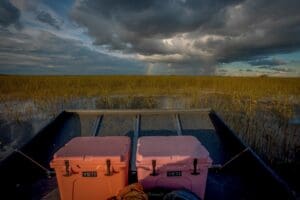
Sawgrass thrives in shallow freshwater and soft, organic soils. It forms vast prairies where the horizon is a mix of water, grass, sky, and scattered tree islands. When water levels are right, sawgrass supports fish, invertebrates, wading birds, and alligators by providing cover, nesting areas, and hunting grounds.
From an airboat, the scale of these sawgrass prairies becomes obvious. In many sections of the central Everglades, you can travel for miles across habitat where sawgrass is the dominant plant, making the landscape look like a giant river made of grass blades rather than open water. That visual impression reinforces the River of Grass identity.
Water Flow: The Engine of Everglades Life
Calling the Everglades a River of Grass highlights a crucial truth: water movement drives the ecosystem.
Seasonal rainfall and upstream flows determine how much water enters the system and how far it spreads. High water periods expand marshes and sloughs, connecting habitats and allowing fish and other aquatic life to move. Low water periods concentrate wildlife in deeper pockets and sloughs, affecting where birds feed and where predators, like alligators, can survive.
Everything—fish, birds, mammals, reptiles, and even tree islands—depends on this rhythm of flow. When water is diverted, drained, blocked, or lacking the river slows or breaks, and the River of Grass can’t function the way it naturally should. Understanding the Everglades as a river helps visitors see why restoration is focused on re‑establishing more natural water timing, depth, and direction.
Marshes, Sloughs, and Tree Islands in the River of Grass
Although the iconic image is open sawgrass marsh, the River of Grass includes several intertwined habitat types:
Sawgrass marshes – broad, shallow areas with dense sawgrass and seasonally varying water levels.
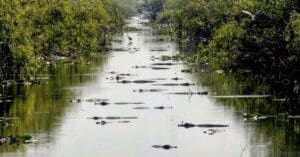
Sloughs – slightly deeper natural channels where water flows more continuously; they act like slow‑moving arteries within the larger marsh.
Tree islands (hammocks) – slightly elevated spots supporting hardwoods or cypress, rising like “islands” out of the marsh.
Together, these habitats form a mosaic that still behaves like a river—water moves through them, around them, and under them. On a River of Grass Adventures tour, you’re moving through this mosaic, not just over a single type of wetland.
Why “River of Grass” Still Matters Today
The River of Grass name does more than sound poetic; it shifts how people think about the Everglades:
It emphasizes connection—what happens upstream affects marshes, wildlife, and coastal estuaries downstream. It reinforces the idea that this ecosystem is dynamic, with water pulsing through it like blood through veins. It reminds us that water management choices—levees, canals, pumps, and development—can help or severely harm a living river, not just a patch of swamp.
For eco‑tour operators like Everglades River of Grass Adventures, this perspective is central. Guests aren’t just seeing “gator country”; they’re visiting one stretch of a continental‑scale water system that influences drinking water, coastal fisheries, and climate resilience across South Florida.
Experience the River of Grass on an Airboat Tour
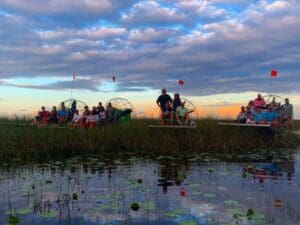
When you step aboard an airboat for an Everglades River of Grass Adventure, you’re stepping into the story of the iconic River of Grass.
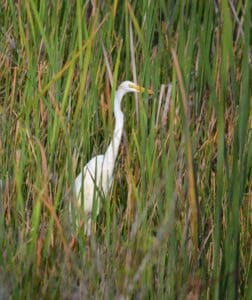
The wide horizon of grass and sky shows you how broad this river really is. The shallow water under the boat illustrates that the Everglades is not deep bayou, but a thin layer of life‑supported by a sheet of rain-fed freshwater. Wildlife sightings—wading birds hunting in sloughs, alligators resting in “gator holes,” raptors soaring over tree islands—demonstrate how many species depend on this moving water.
By the end of a ride, many guests realize that “River of Grass” is not just a nickname. It’s a precise, scientific description of how the Everglades works—and a reminder of why protecting water flow, habitat, and wildlife here matters far beyond the marsh.
How You See The Everglades Matters!