
Restoring the River of Grass: How Today’s Projects Shape Tomorrow’s Everglades
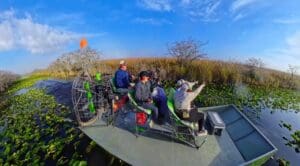
When you climb aboard an airboat with Everglades River of Grass Adventures, you’re gliding across one of the most ambitious restoration stories anywhere in the world. From massive reservoirs to the quiet work of backfilling old canals, today’s projects are slowly helping the Everglades reclaim its natural rhythm.
A Quick Look at Everglades Restoration Today
The South Florida Water Management District (SFWMD) is the lead state agency responsible for planning, building, and operating much of the infrastructure that makes Everglades restoration possible. Working in a 50/50 partnership with the U.S. Army Corps of Engineers under the Comprehensive Everglades Restoration Plan (CERP), SFWMD helps restore the quantity, quality, timing, and distribution of water across the greater Everglades ecosystem
The Comprehensive Everglades Restoration Plan (CERP) is the largest ecosystem restoration effort on the planet, designed to fix decades of engineering that diverted, drained, and sliced up the wetlands we know as the Everglades. Instead of one project, CERP is a network of reservoirs, stormwater treatment areas, canal modifications, and flow-way connections that work together to move more clean water south, protect estuaries, and restore wildlife habitats.
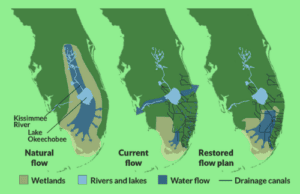
For guests on our tours, that means the landscape you’re exploring is not frozen in time—it’s actively changing as restoration projects progress, reconnecting marshes and reviving the historic “River of Grass” sheetflow from Lake Okeechobee down into Everglades National Park and Florida Bay.
The EAA Reservoir: A New “Water Battery” for the Everglades
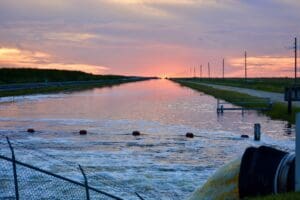
EAA Reservoir construction: One of the most important projects underway is the Everglades Agricultural Area (EAA) Reservoir, located south of Lake Okeechobee. Often called a “crown jewel” of restoration, this giant reservoir and its treatment wetlands will store and clean vast amounts of freshwater that can finally be sent south where the ecosystem needs it most.
Here are a few key facts about the EAA Reservoir:
Massive storage capacity- The reservoir is designed to hold about 240,000 acre-feet of water—over 78 billion gallons—making it larger in volume than Manhattan and capable of delivering up to roughly 470 billion gallons of clean water south in a typical year when combined with operations.
*An acre‑foot is a way to measure a large volume of water: it’s the amount of water needed to cover one acre of land to a depth of one foot.
Cleaning water before it flows south- A 6,500‑acre stormwater treatment area (STA) filters water from Lake Okeechobee, removing nutrients like phosphorus before that water is released into the central Everglades and eventually Florida Bay.
Reducing harmful discharges- By capturing and storing excess lake water, the reservoir will greatly limit the need for damaging releases to the Caloosahatchee and St. Lucie estuaries, helping reduce algae blooms and protect coastal communities and fisheries.
Thanks to new agreements between Florida and the U.S. Army Corps of Engineers, construction of the EAA Reservoir has been accelerated by five years, with completion now targeted for 2029 instead of 2034. Inflow pump stations capable of moving about 3 billion gallons of water per day from Lake Okeechobee into the reservoir are already under construction, showing how rapidly this project is advancing.
Turning Pollution into Productivity
One of the most inspiring pieces of this restoration story is how they are tackling nutrient pollution that fuels harmful algae blooms. As water flows through treatment wetlands south of Lake Okeechobee, plants capture excess phosphorus and nitrogen in their biomass. That nutrient‑rich vegetation is then harvested, baled, and shipped out of the watershed for use as cattle feed and other agricultural products, turning would‑be pollution into something productive. Every bale represents real, permanent nutrient removal—pollution that won’t cycle back into the Everglades or coastal estuaries.
Backfilling Canals: Undoing the Old Plumbing of the Everglades
If the EAA Reservoir is the big, visible piece of the puzzle, canal backfilling is the quiet work that often goes unnoticed—but it’s crucial for restoring natural sheetflow across the marsh. Over the last century, canals and levees were dug to drain wetlands and control floods, but they also acted like giant drains, pulling water out of the marsh too quickly and sending it in unnatural directions.
Backfilling a canal means partially or fully filling in sections with earth and sediments so water can spread out instead of racing down a deep channel. In experimental projects, scientists have tested canal backfilling along with levee removal and controlled flow through culverts to see how ridge‑and‑slough wetlands respond when more sheetflow is restored.
Early findings suggest several benefits:
Improved sheetflow patterns- Backfilling helps water move more slowly and broadly across the marsh, reinforcing the classic ridge‑and‑slough pattern that defines healthy Everglades wetlands and it’s natural sheetflow.
Better habitat and water quality- Researchers observed improved habitat for fish, including bass, and reduced movement of nutrient‑rich sediments that can degrade downstream ecosystems when canals act like high‑speed conveyor belts.
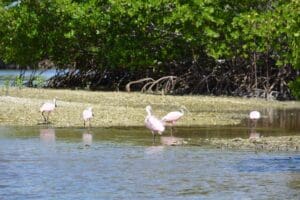
Less artificial drainage- By softening or removing some of the “hard edges” of canals and levees, managers can reduce excessive drainage from the central Everglades and keep more water on the landscape where wading birds, alligators, and native vegetation depend on seasonal flooding cycles.
These projects may not be as dramatic as a giant reservoir, but they play a vital role in restoring the subtle details of the slow-moving flow that make the Everglades such a unique ecosystem and considered a “River” of Grass.
Limiting Excessive Drainage and Reconnecting Critical Flows
Modern restoration isn’t just about adding new structures; it’s about rethinking how water moves through the existing system so the central Everglades no longer acts like a landscape that’s constantly being over‑drained, or “over dehydrated” if you will; during periods of natural drought. This kind of repeated, prolonged drying severely disrupts the core ecological processes of the Everglades, beginning with the peat soils. Today’s planning efforts and construction work focus on reconnecting flow‑ways, adjusting operations, and creating new paths for water to move south instead of east and west.
Projects and strategies include:
Central Everglades Planning Project (CEPP)- CEPP bundles efforts to send more clean water south through central Everglades marshes, including integration with the EAA Reservoir and treatment areas.
Flow‑way connections like Blue Shanty- New “last‑mile” flow‑ways such as the Blue Shanty project are designed to move restored flows all the way into Everglades National Park and Florida Bay, making sure water management changes truly reach the downstream ecosystem.
Operational changes- Even with canals in place, changing how and when structures move water can reduce rapid drainage and help mimic historic patterns, giving wildlife and vegetation the seasonal wet and dry cycles they evolved with.
Together, these efforts help shift the system from over‑draining the central Everglades toward holding and flowing more clean water south—exactly the kind of change that guests on our tours will learn about -with hopes of seeing healthier marshes, more consistent water levels, and improved habitat over time.
What This Means for Your Airboat Adventure
For us at Everglades River of Grass Adventures, restoration is more than a headline—it’s part of the story we share with every guest who joins us on the River of Grass. The Everglades is our home, and as a family of generational gladesmen and women, protecting and restoring this place isn’t optional; it’s imperative. As reservoirs, treatment wetlands, canal backfills, and new flow‑ways go into effect, they help secure a more resilient future for the wildlife and cherished ecosystem you’re here to see: from alligators and wading birds to sawgrass prairies and tree islands that anchor this iconic landscape.
On your airboat ride, you’re not just exploring a national treasure—you’re witnessing a living restoration project in motion. Science, policy, and local stewardship are working together to keep these waters flowing, and we’re committed to doing our part so the Everglades- the heart beat of Florida – can thrive for generations to come.
HOW YOU SEE THE EVERGLADES MATTERS!
Everglades River of Grass Adventures
“Everybody needs beauty as well as bread, places to play in and pray in, where nature may heal and give strength to body and soul” -John Muir