
Everglades Invasive Species: Burmese Pythons, Green Iguanas & How Guests Can Help
The Florida Everglades is one of the most unique subtropical wetlands on Earth—a maze of sawgrass, tree islands, and winding sloughs filled with wildlife that exists nowhere else. But alongside the alligators, white-tailed deer, wading birds, and turtles, there’s a growing threat: invasive species that don’t belong here and are reshaping this ecosystem in ways we have witnessed over the last two decades.
Two of the most impactful and commonly known invaders are Burmese Pythons and Green Iguanas. At River of Grass Adventures, we use our educational airboat adventures and guided iguana hunts to turn concern about these species into hands-on education and real conservation action.

What Is An Invasive Species?
An invasive species is a plant or animal that is not native to a particular area and causes harm once it becomes established. In South Florida, many invasives arrive through the pet trade or ornamental landscaping, escape or are released, and then thrive in our warm, subtropical climate.
Because they didn’t evolve here, these species often have few natural predators. Their populations can explode, pushing out native wildlife, damaging habitats, and disrupting the delicate balance of the Everglades ecosystem.
Burmese Pythons: Hidden Super-Predators Of The Marsh
Burmese Pythons are large constrictor snakes native to Southeast Asia that now have a well‑established population across much of South Florida, especially the Greater Everglades region, even down to the Florida Keys. They’re thought to have originated from escaped or released pets decades ago, then quietly spread and adapted through the remote south Florida wetlands.
A full‑grown python can easily exceed 15 feet in length and feed on a wide variety of prey: raccoons, rabbits, birds, deer, and even alligators. Scientific studies in some parts of the Everglades have documented sharp declines in small mammal populations where pythons have become common, showing just how powerful their impact on the ecosystem can be.

Why Pythons Are So Hard To Control
From the outside, it might seem simple—“just go catch the snakes”—but Burmese pythons present a perfect storm of challenges:
-
Warm, wet, familiar climate
South Florida’s subtropical heat, high humidity, and seasonal flooding are very similar to the pythons’ native range in Southeast Asia, so they don’t have to “adjust” much to survive. -
Tons of prey, very little competition
Pythons eat a wide variety of mammals, birds, and even reptiles, and in Florida they have access to abundant raccoons, rabbits, wading birds, and more, with few other big predators competing for the same food. -
Few natural predators
In their native range, pythons deal with more predators, parasites, and diseases, but in Florida those natural checks are mostly missing, so more snakes survive to adulthood. -
Big clutches and long lives
A single female Burmese python can lay dozens of eggs in one nest, and adults can live many years, which lets populations rebound quickly even when snakes are removed. -
Camouflage and elusive behavior
Their brown-and-tan pattern blends perfectly with sawgrass, cattails, and peat, and they are mostly active at night or at dawn and dusk, making them extremely hard for people to find. -
Comfortable on land and in water
Burmese pythons are strong swimmers and can move long distances through canals and marshes, which is one reason they’ve spread across much of the Greater Everglades system
Wildlife agencies and trained contractors remove pythons year‑round, but the combination of vast habitat and elusive behavior makes complete eradication very challenging with current tools. That’s why public awareness, responsible pet ownership, and support for removal programs are critical pieces of the solution.
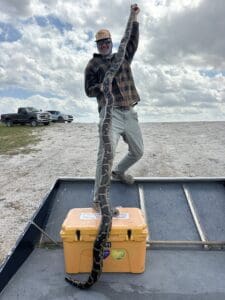
The Florida Python Challenge: Public Conservation In Action
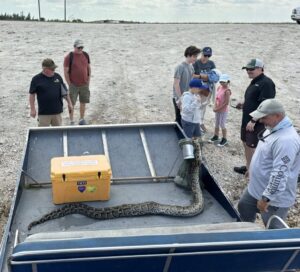
Every year, Florida invites residents and visitors to help tackle the python problem through the Florida Python Challenge—a multi‑day competition focused on removing invasive Burmese pythons from public lands in South Florida. Participants compete for cash prizes, including awards for the most pythons removed and the longest snake captured.
To take part, hunters must complete required online training, register, and follow strict rules designed to protect native wildlife and ensure humane treatment of every python. The event not only takes hundreds of pythons out of the ecosystem each year, it also shines a spotlight on the broader issue of invasive species and the risks of releasing non‑native pets into the wild.
Green Iguanas: The uban and inner city invaders
While pythons dominate headlines, green iguanas are the invaders most guests spot around coastal and urban areas in Miami and South Florida. These small – large, mostly herbivorous lizards are native to Central and South America but now thrive along canals, seawalls, neighborhoods, and mangrove shorelines.
Green iguanas may look harmless basking in the sun, but they cause plenty of problems:
- They burrow into canal banks and seawalls, weakening infrastructure.
- They eat ornamental plants and landscape vegetation. Although mostly herbivores, they will also eat bird eggs, small animals, and native tree snails, and they consume plants like nickerbean, which is a host plant for the endangered Miami blue butterfly
- They compete with native species for food and space.
- Droppings on docks, decks, boats, pools, and walkways are a major complaint and can carry Salmonella, creating a health risk for people and pets.
Because they’re so comfortable living around people, iguanas are often the first invasive reptile Miami visitors actually experience up close. That makes them a powerful teaching tool on our tours—and a species where hands‑on removal can really add up.

River Of Grass Guided Iguana Hunts: Conservation & Adventure Intertwined
At River of Grass Adventures, conservation doesn’t stop at educational discussion on a tour. Our guided iguana hunts give guests a chance to step from “spectator” to “participant” in the south Florida invasive species story.
On these trips, our guides:
- Teach the backstory – how green iguanas arrived, why they’re considered invasive, and what kind of damage they cause to both nature and infrastructure.
- Create lasting memories: as you glide through the Miami waterways, where you are given the opportunity to humanely drop dozens of Iguana’s with an air style rifle.
- Emphasize safety and ethics – we follow state regulations and humane practices, making sure every hunt respects the environment and non‑target wildlife.
- Create hands‑on stewardship – guests help remove invasive iguanas, directly reducing local impact while learning what responsible control looks like.
For many visitors, the experience reshapes how they think about “cool exotic animals.” It becomes clear that loving wildlife also means protecting native species—and that sometimes, conservation means making tough choices about animals that don’t belong here.
Hunters are welcome to keep their harvested iguanas; however, any not taken will be respectfully repurposed. Nothing goes to waste — iguanas are donated as food for local communities in need, provided as feed for rehabilitated wildlife, or composted into nutrient-rich fertilizer that restores the soil. Every part is used in a regenerative way that supports people, animals, and the land. For pricing information, please contact our team.

Why This Story Matters On Every Everglades Adventure
Sharing the truth about Burmese Pythons, Green Iguanas, and other invasive species helps visitors see the Everglades as a living, fragile, and changing ecosystem, not a museum exhibit.
It connects the thrill of an airboat ride to the real conservation challenges facing South Florida today.
Whether guests join us for a sunset airboat tour, a semi private airboat adventure, or a guided iguana hunt, our goal at River of Grass Adventures is the same: to send them home with unforgettable memories, a deeper understanding of the Everglades, and a sense that they, too, can be part of protecting this River of Grass for generations to come.