
American Flamingo Returns to the Everglades: A Heart-Fluttering Sight
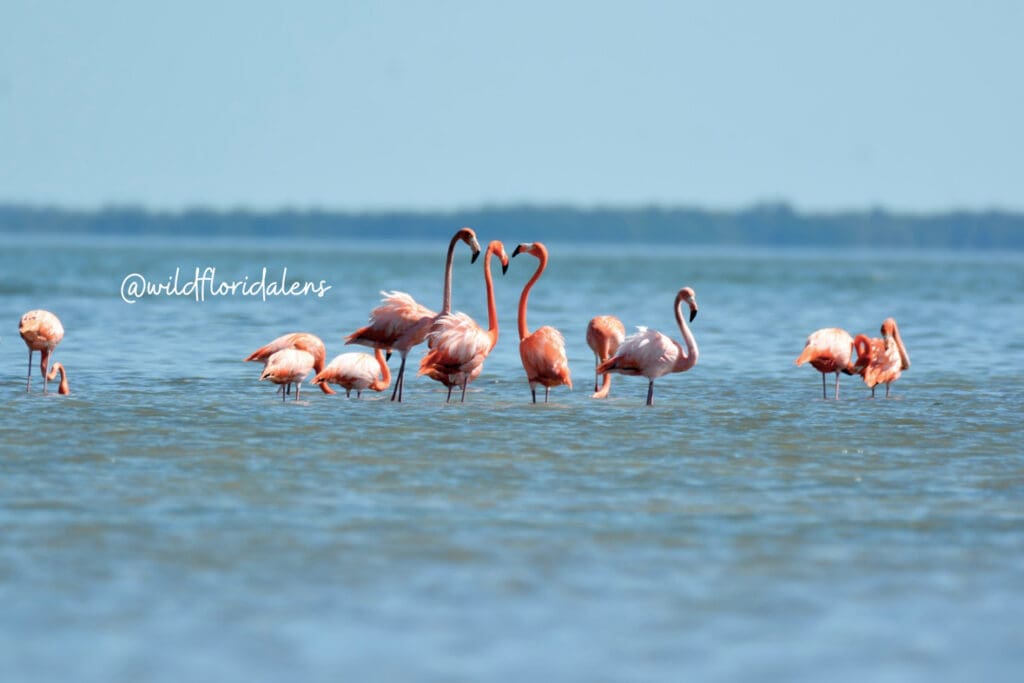
The American Flamingo returns to the Everglades, capturing hearts and attention across the globe as these iconic birds stage a remarkable comeback to South Florida. Once vanished for over a century due to plume hunting and habitat loss; wild American Flamingos are now spotted in dense flamboyances feeding in the flats of Florida Bay. Their vibrant pink flocks signaling promising hope for Everglades ecosystem recovery.
The Comeback Story
In recent years, powerful storms have unexpectedly helped accelerate their return. When hurricanes sweep through the Caribbean, strong winds can displace flamingos from established breeding colonies and push them north into southern Everglades National Park & the Florida Bay. Instead of quickly moving on, many of these storm-blown visitors have found improved conditions here—healthy seagrass beds, restored hydrology, and abundant carotenoid rich food— enticing them to linger longer than in decades past. Each passing season, more of these displaced birds remain, turning once-rare sightings into a more regular spectacle across Everglades National Park.
Unique Flamingo Traits
These 5 ft tall wading birds feed by tilting their necks backward and turning their heads fully upside-down, aligning their curved, sieve-like bills parallel to the water’s surface in shallows of 6-18 inches deep. The comblike nature of their bills trap shrimp, algae, and tiny invertebrates as their fleshy tongues pump water out like a piston, expelling debris while swinging their heads side-to-side to stir food up from the waters bottom.
If you thought a Flamingo’s feeding style was extraordinary, their breeding and nesting strategy is just as remarkable. After elaborate mating dances, pairs work together to build cone shaped mud-mound nests, often up to a foot tall and one to two feet wide, using their bills and feet to sculpt sticky mud into sturdy towers above the waterline. Atop this muddy pedestal, the female will lay a single, chalky-white egg, which both parents carefully incubate for nearly a month, carefully rotating the egg with their beaks to protect it from cracking, flooding, and scorching subtropical heat.
Wild American flamingos commonly reach 30-40 years old, with some exceeding 50 in captivity. This longevity supports their slow reproduction of one chick every 1-2 years after maturity at 3-5 years of age.
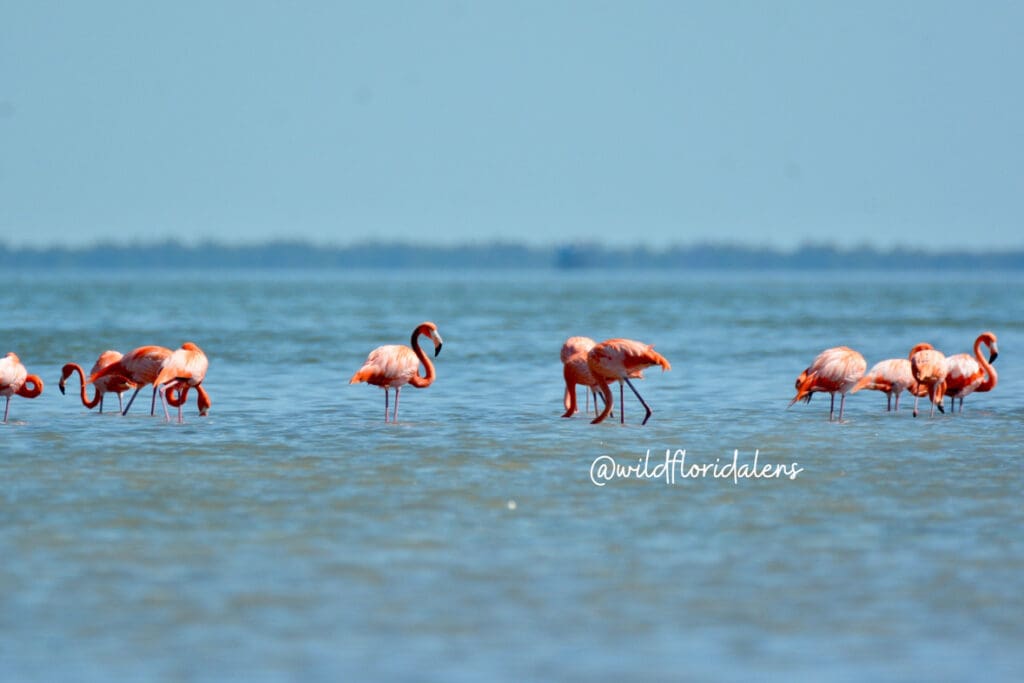
When we see the Flamingos return to the Everglades, we are reminded of God’s artful signature and perfectly adapted creation.
Now, in a fitting celebration, the American Flamingo is on its way to becoming Florida’s state bird. Already passing the Florida House, only awaiting approval by the Senate and receiving the governor’s signature.
Pair your River of Grass Airboat Adventure with a drive south to Everglades National Park’s Flamingo district, where you can stay in a Houseboat, Eco-Tent, or Lodge. During your stay, experience Florida Bay’s flats that offer prime chances to glimpse these wild Florida icons feeding in flamboyances. Best flamingo sightings opportunities occur December-May.
Special thanks to Sarah Rohal with Wild Florida Lens for sharing her stunning photos of these pink & crimson Everglades beauties with The River of Grass Adventures!