
Why Kids Love the Everglades’
The Everglades gives kids something they cannot get from a screen: the chance to see a real wetland ecosystem at work. From alligators and wading birds to sawgrass, cypress trees, fish, turtles, and insects, the River of Grass turns a family outing into an unforgettable lesson about wildlife, water, and conservation.
For families visiting South Florida, introducing children to the Everglades can spark curiosity, encourage outdoor confidence, and help raise the next generation of people who understand why protecting Florida’s natural places matters.
For kids, the River of Grass is exciting because it is full of surprises. One moment they may see a bird standing quietly at the water’s edge; the next, they may spot a turtle, fish, dragonfly, or alligator. The Everglades teaches children that wetlands are not empty spaces. They are busy, living habitats shaped by water, weather, plants, and wildlife.
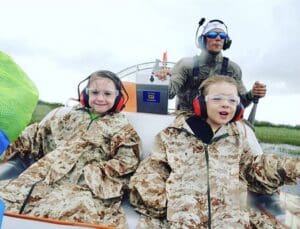
A place made for discovery
The Everglades feels different from almost anywhere else in the United States … and Florida. Instead of mountains or city skylines, children see a vast, low-lying mosaic of wetlands, sawgrass prairies, cypress stands, tunnels of pond apple trees, and open water bedazzled with sunlight and lily pads. It is a place where every look across the marsh can lead to a question:
Why does the water move so slowly?
Is anything hiding in the grass?
Why do some birds look like statues?
How long can an alligator hold it’s breath under water?
This sense of mystery is exactly why kids love the Everglades. Nature gives them something that screens and classrooms cannot fully replicate: a chance to quietly observe, ask questions, make connections, and discover answers in real time.
The Greater Everglades contains a dynamic mix of distinct habitats that support plants and animals found nowhere else on Earth. Those changing habitats make every visit feel like a unique adventure – because it is!
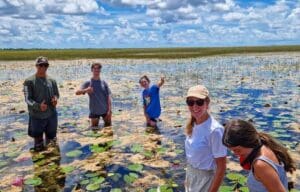
Wildlife makes learning exciting
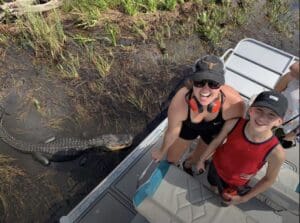
For many young visitors, spotting wildlife is the moment the Everglades becomes unforgettable. Seeing an American Alligator glide through the water, watching an anhinga dry its wings, or noticing a great blue heron patiently hunting along the waters edge turns a lesson into a real experience.
The Florida Everglades is home to more than 350 bird species, 40 mammal species, and a wide range of reptiles, fish, amphibians, and other wildlife.
When children encounter animals in their natural habitat, they begin to understand that wildlife is not a cartoon character or a picture in a book. Each species has a job in the ecosystem:
- Alligators help shape wetland habitat by creating deeper pools that can hold water during dry seasons.
- Wading birds depend on healthy water levels and abundant fish for food.
- Fish, frogs, insects, and turtles are part of a food web that supports larger animals.
- Predators, scavengers, plants, and decomposers all play a role in keeping the ecosystem balanced.
That is an invaluable lesson: every living thing is connected. A child who understands those connections is more likely to recognize why clean water, healthy habitat, and responsible choices matter.
The Plants That Shape the Everglades
The Everglades is often called the “River of Grass” because of its broad, slow-moving freshwater wetlands and sweeping sawgrass. But kids quickly learn that the landscape is much more than grass. It is a rich world of sawgrass, cypress trees, mangroves, orchids, bromeliads, pond apple trees, ferns, and native wildflowers.
South Florida sits where temperate North America meets the tropical Caribbean, which helps create an unusually diverse mix of plant and animal life. Everglades National Park includes plant communities and legally protected species that are especially important to the region.
Learning about plants teaches children how nature works from the ground up:
- Sawgrass wetlands help define the open marsh landscape and support waterflow
- Cypress trees thrive in wet conditions and form important wetland communities.
- Mangroves protect shorelines, create nurseries for fish and wading birds, and connect the freshwater Everglades to Florida Bay and coastal waters.
Nature builds skills for life
A day in the Everglades can help children develop skills that matter for life. Outdoor learning naturally encourages children to slow down, pay attention, and become active participants in their surroundings.
Time in nature can support curiosity, creative thinking, problem-solving, focus, and emotional well-being. Research summarized by the Children & Nature Network finds that children with access to nature tend to be healthier, happier, more engaged in learning, and more likely to become environmental stewards.
The lessons children gain outdoors are often simple—but powerful:
- Curiosity: “What is that bird doing?” can become a lesson about animal feeding behavior, migration, or habitat.
- Patience: Wildlife does not appear on command. Kids learn to wait, listen, and watch closely.
- Confidence: Navigating a trail, riding on an airboat, or identifying an animal helps children feel capable in unfamiliar environments.
- Respect: Children learn that wild animals need distance, wetlands need protection, and litter does not belong in nature.
- Responsibility: Small actions—staying on designated paths, picking up trash, using less plastic, and protecting water—connect to the health of the larger ecosystem.
These experiences help children see themselves as part of nature, not separate from it.
Native plants provide food, cover, nesting areas, and shade for animals.
When a child learns to identify a plant, they are learning more than its name. They are learning observation, patience, and respect for the systems that make life possible.
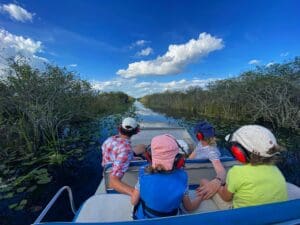
Tomorrow’s conservationists
Conservation begins with connection. It is difficult to care deeply about a place you have never explored, a bird you have never watched, or an animal you have never seen in the wild.
Research on children’s connection to nature indicates that early experiences outdoors are associated with later pro-environmental attitudes and behaviors. The Everglades is therefore more than a destination for a family outing—it is a place where the next generation can begin to understand what is worth protecting.
Everglades conservation is especially important because this ecosystem supports wildlife, helps store and move and filter water for the state of Florida, nurtures fisheries and bird life, and connects South Florida’s inland wetlands to Florida Bay and the coast.
A child who sees an alligator in the wild, learns why wetlands matter, and experiences the beauty of a sawgrass prairie may grow up to care about wetland habitats, better understand the value of clean water, and may become the adult who speaks up for conservation.
That is why bringing kids to the River of Grass matters.
Make the Everglades Memorable
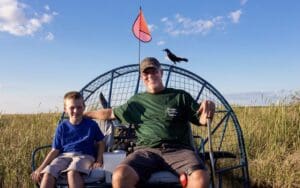
At Everglades River of Grass Adventures, our mission is to make each child’s visit to the Everglades meaningful, exciting, and memorable. An airboat adventure is more than a ride across the water—it is an opportunity for families to experience the River of Grass together and discover the plants, wildlife, and waterways that make this ecosystem so special.
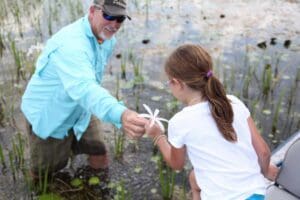
We believe the best Everglades experiences for children are safe, engaging, and filled with opportunities to explore. Our goal is not simply to spot wildlife and move on. Our Captains encourage young guests to slow down, ask questions, notice the details, and leave with a real connection to the Everglades.
A memorable day in the Everglades might include watching a bird lift off from the sawgrass, spotting a turtle swimming through the shallow water, or observing an American alligator from a safe and respectful distance. Every sighting is a chance to learn that the Everglades is a living ecosystem where water, plants, and wildlife depend on one another.
We encourage children and families to:
Look for birds, fish, reptiles, insects, and native plants—not only alligators.
Ask questions about the wildlife and habitats they see.
Notice how the water, sawgrass, trees, and animals are connected.
Take only photographs and leave the Everglades as they found it.
Share one new thing they learned and one part of the Everglades they want to protect.
The Everglades teaches children that nature is not distant or abstract. It is alive, connected, and worth caring for right here in South Florida. By sharing the River of Grass with families, Everglades River of Grass Adventures hopes to create lasting memories, encourage curiosity, and inspire the next generation to value and help protect the Everglades.
Everglades River of Grass Adventures
HOW YOU SEE THE EVERGLADES MATTERS!