
Flora and Fauna of the River of Grass: What You May See on an Everglades Airboat Adventure
The Everglades is not just a place to visit—it is a living, breathing ecosystem shaped by water, weather, wildlife, and it’s own rhythm.
On an airboat tour with River of Grass Adventures through the Francis S. Taylor Wildlife Management Area, also known as Water Conservation Area 3B, every trip is different. Some days the marsh is alive with wading birds lifting from the sawgrass. Other days, an alligator’s bellow rolls across the water before you ever see it’s armor. You may find a purple gallinule tiptoeing across spadderdock lily pads, a turtle breaking the surface beside the boat, or an osprey watching the water from above preparing for a dive.
That is the beauty of the River of Grass: it is wild, unscripted, and full of life.
The Everglades River of Grass is a mosaic of sawgrass marshes, sloughs, and tree islands. Those connected habitats support an extraordinary web of life, from the smallest algae and insects to alligators, otters, deer, and birds of prey. When we slow down to look beyond the thrill of the airboat ride, we begin to see why the Everglades is a unique global treasure and why protecting this place is so important.
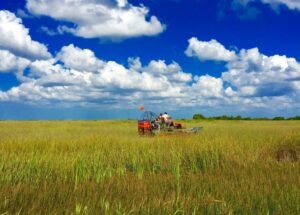
The Sawgrass Marsh: Home to Everything
The first thing most guests notice is the “vast expanse of sawgrass” stretching to the horizon.
Sawgrass is the iconic plant that gives the Everglades its “River of Grass” nickname. Though it looks like a grass, sawgrass is actually a sedge with sharp, serrated edges—one reason locals know to handle it with respect. It grows across shallow freshwater marshes and creates shelter, nesting cover, and feeding habitat for countless Everglades species.
But the Everglades is not one endless flat field of sawgrass. As we travel through Area 3B, you may see open-water sloughs, canal systems lined with patches of lilies, and islands of trees rising above the marsh.
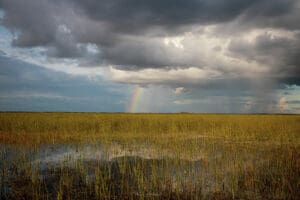
The Florida Everglades: A Mosaic of Habitats
Beyond the River of Grass, the Everglades is a connected mosaic of habitats shaped by subtle changes in elevation, water depth, fire, soil, and salinity. These include hardwood hammocks and pinelands on higher, drier ground; freshwater marl prairies and sloughs where shallow water moves through the landscape; and cypress strands and swamps in wetter areas. Farther south and west, freshwater transitions into coastal lowlands, mangrove forests, and marine and estuarine waters around Florida Bay, the Ten Thousand Islands, and the Keys. This freshwater-to-saltwater connection is what makes the Everglades so ecologically important—and why protecting water flow benefits wildlife from the sawgrass marsh to the coast. Each habitat supports its own mix of flora and fauna, while remaining connected by the movement of water.
Wading Birds & Birds of Prey: The Graceful Hunters of the Everglades
The Everglades is world-famous for birds, and there is a good reason for it. Keep your eyes set across the shallow wetlands and the sky overhead—there is always something on the hunt – though with wading birds, their movement is so graceful it feels less like a hunt and more like an elegant performance.
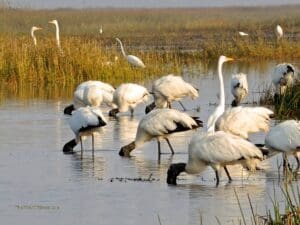
Great Blue Herons and Egrets
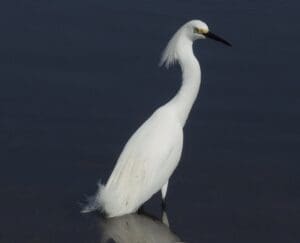
Great blue herons are among the most recognizable birds in the marsh. Tall, patient, and usually still as a statue, they stalk shallow water for fish, frogs, and other prey. Great egrets and snowy egrets are often nearby, their bright white feathers standing out against green sawgrass and dark water.
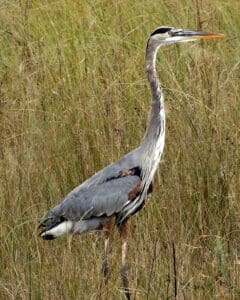
Purple Gallinules
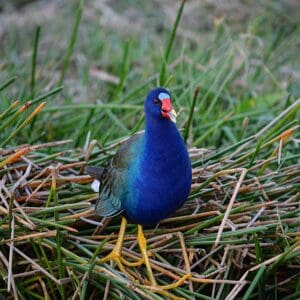
One of the most friendly, showy, and vibrant birds in the Everglades is the purple gallinule. With its bright purple-and-blue feathers, red-and-yellow bill, and oversized feet, it looks almost unreal when it walks across floating vegetation.
Those long toes help disperse its weight over lily pads and other marsh plants. If you are lucky enough to spot one, take a moment to appreciate the plants beneath it—healthy marsh vegetation provides food, cover, and travel routes for birds like gallinules.
Wood Storks and Roseate Spoonbills
Wood storks and Roseate Spoonbills are two of the most unforgettable birds guests may encounter in the Everglades.
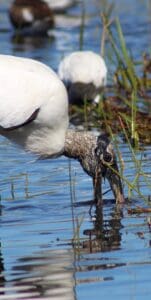
Wood storks use a touch-feeding method, moving their bills through shallow water until they snap up fish or other prey. Their feeding success depends heavily on the right water conditions: water needs to recede at the right time to concentrate small fish where the birds can reach them.
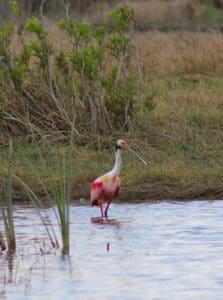
Roseate spoonbills use their broad, spoon-shaped bills to sweep through the water in search of small fish and aquatic invertebrates. Their pink color, graceful flight, and unusual feeding behavior make them a guest favorite, but their presence also reflects the health of the wetlands that support their food supply.
Anhingas
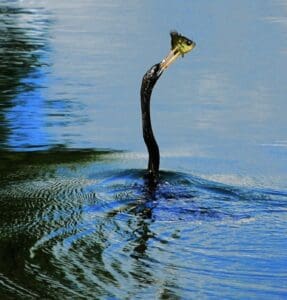
Anhingas are another classic Everglades sight, often called “snakebirds” because they swim with nearly their entire body underwater while their long neck and head rise above the surface. Unlike many waterbirds, their feathers readily become waterlogged, helping them dive and move quietly beneath the water as they hunt fish and amphibians with a sharp, spear-like bill.
Snail Kites and Ospreys
Look high above the marsh and you may spot a raptor or bird of prey.
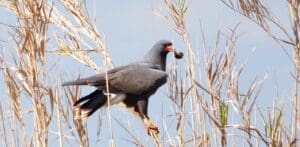
The Everglade snail kite is one of Florida’s most specialized birds of prey. Its curved bill is designed to remove apple snails from their shells, and the species depends on healthy freshwater wetlands with the right water depth and plant communities. It is federally listed as endangered, and habitat loss and wetland degradation remain major threats.
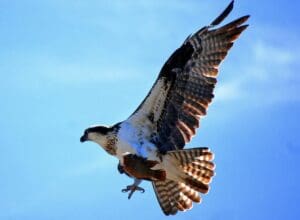
Ospreys are another exciting sight. These fish-eating raptors may perch near open water, circle overhead, or dive feet-first at speeds of 40 mph toward a fish below.
Alligators: Engineers of the Everglades
No Everglades animal captures people’s attention quite like the American alligator.
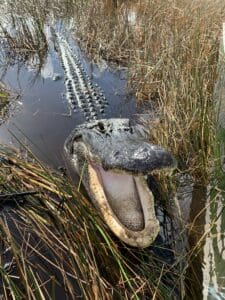
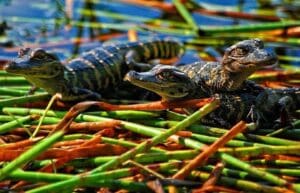
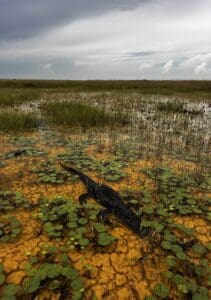
Guests may see a small baby alligator tucked close to shoreline vegetation, a large adult resting in the sun, or the eyes and snout of a gator quietly breaking the water’s surface. Every sighting is a captivating moment, but these animals are far more than an Everglades photo opportunity.
Alligators are ecosystem engineers. Their “gator holes”—deep depressions they create and maintain in the marl —can hold water during dry periods, providing refuge for fish, turtles, invertebrates, and birds when surrounding marshes become dry
Spring and early summer bring another unforgettable sound to the marsh: bellowing. Alligator courtship begins in early April, with mating typically occurring in May and June. Both males and females vocalize, but the deep, low bellow of a large male can carry across the open marsh and vibrate through the water.
Later in summer, females guard nests built from vegetation and mud. Baby alligators begin hatching around August and stay close to their mothers during their early lives. If you see small gators, remember that a protective mother may be nearby—admire them from a respectful distance.
Turtles, Otters, and Other River of Grass Residents
The Everglades has plenty of inhabitants that do not always announce themselves.
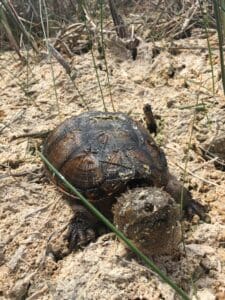
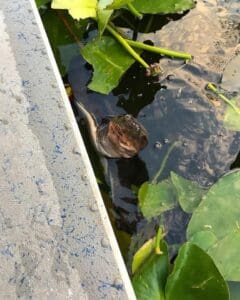
Florida softshell turtles may surface briefly for air before disappearing again. Their flattened, leathery shells and long snorkel-like noses make them well suited to life in muddy marshes and canals. Snapping turtles are another ancient-looking resident of the wetlands, moving quietly through the water in search of fish, invertebrates, carrion, and other food.
River otters are less commonly seen, but they are always a thrilling surprise. Quick, curious, and playful, they may travel along marsh edges or hunt in deeper water. Spotting one is a reminder that healthy wetlands support far more than the animals that are easiest to notice.
And every once in a while, guests may see a white-tailed deer along the wet grasslands, a tree island, levee, or higher patch of ground. Deer are not commonly visible, which makes each sighting feel especially memorable.
The Plants & Inconspicuous Organisms Amongst the Wildlife
Wildlife gets most of the attention, but the Everglades plants and microscopic organisms are what allow wildlife thrive, second to water
Periphyton: The Foundation Few People Notice
One of the most important parts of the Everglades may look like green or tan, spongy material floating on the water or coating the marsh bottom.
That is periphyton—a community of algae, cyanobacteria, and microorganisms. It forms the base of the freshwater food web, supporting insects, snails, and other small creatures that are then eaten by fish, turtles, birds, and larger predators.
It may not be as dramatic as an alligator or as colorful as a spoonbill, but periphyton is proof that even the smallest pieces of the Everglades matter.
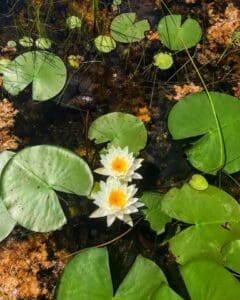
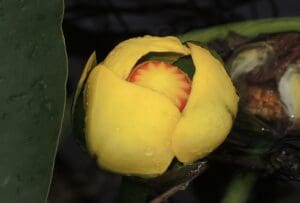
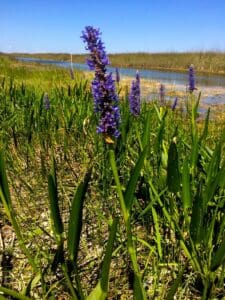
Spatterdock, Pickerelweed, and Water Lilies
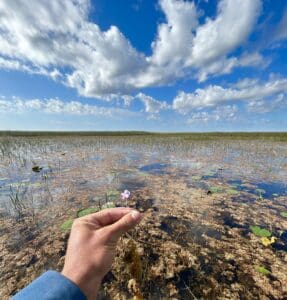
Spatterdock lilies, pickerelweed, and water lilies create some of the most beautiful scenes in the marsh.
Their leaves and stems provide cover for fish, insects, snails, frogs, and young wildlife. Birds use them as travel route, fish and turtles use the shaded water below. These plant communities add structure to the marsh and create places where life can gather.
Pond Apple Trees
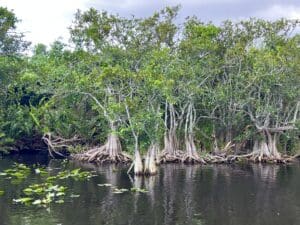
Pond apple trees grow in wet areas near sloughs, ponds, and tree islands. These native trees tolerate flooding and can provide important cover and perching places for birds. In parts of the Everglades, birds such as anhingas use pond apple branches near water for resting and nesting.
A Reminder of What Is at Stake
The Everglades is resilient, but it faces real challenges. Altered and mismanaged water flow, polluted runoff, habitat loss, invasive plants, and invasive animals all affect the balance that wildlife depends on.
Restoration is underway through the Comprehensive Everglades Restoration Plan, a state-and-federal effort focused on improving the quantity, quality, timing, and distribution of water across South Florida. Projects now underway include water-storage reservoirs, stormwater-treatment areas, and infrastructure designed to move cleaner water south into the Everglades—helping restore more natural flow patterns and support the habitats wildlife needs.
Invasive Species
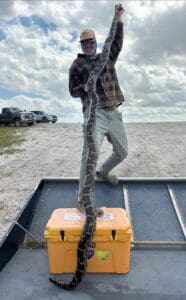
The Burmese python is one of the most serious invasive threats in South Florida. These large snakes are well established in the Everglades and prey on native mammals, birds, and reptiles. A python sighting is rare, but it is a powerful reminder that conservation is not just about appreciating the wildlife we have—it is about protecting it from the pressures it faces.
Come Explore—and Help Protect—the River of Grass
At River of Grass Adventures, we believe the best Everglades tours do more than show guests wildlife. They help people understand what they are seeing and why it is worth protecting.
When you ride with us, bring your curiosity. Ask about the birds. Ask why the water looks different in one area than another. Ask about the sawgrass, the tree islands, the alligators, and the wildlife that calls this wetland wilderness home.
Every guest who leaves with a deeper appreciation and knowledge of the Everglades becomes part of its conservation story.
Come experience the wild beauty of the River of Grass with our family. Enjoy the airboat ride, make memories with the people you love, and leave with a better understanding of the remarkable ecosystem beneath the sawgrass.
HOW YOU SEE THE EVERGLADES MATTERS!
Everglades River of Grass Adventures
“Everybody needs beauty as well as bread, places to play in and pray in, where nature may heal and give strength to body and soul” -John Muir